Where to draw the line
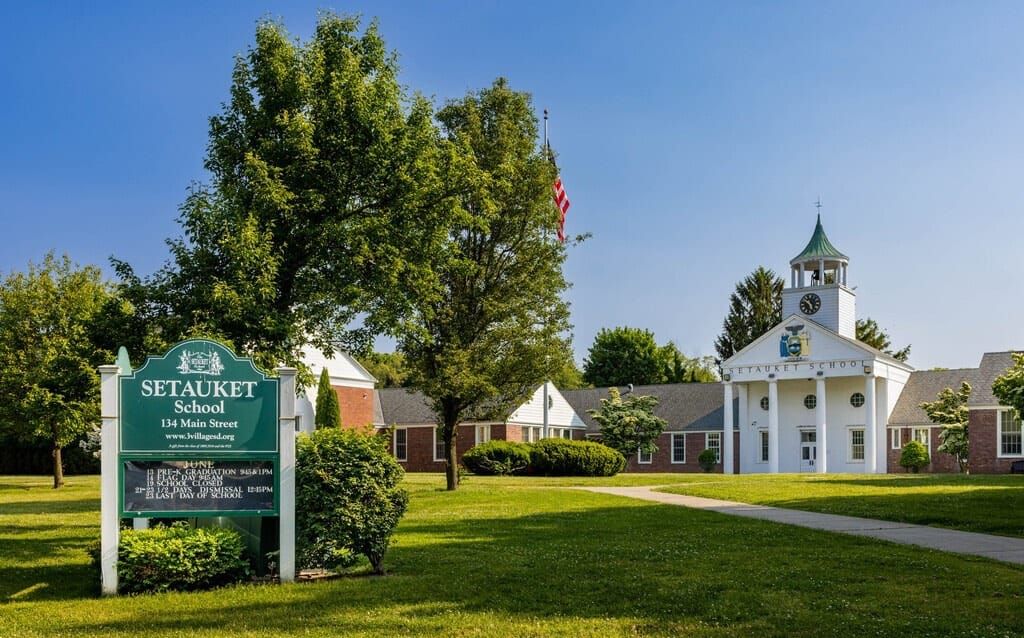
I grew up in a small town on Long Island, about ninety miles east of New York City. Out where I lived, we had cows and an enormous glacially deposited boulder (Patriots’ Rock) where we played cops and robbers, aliens and cowboys, or, if we weren’t feeling inspired, chucked rocks off the top. Down the street from my elementary school, and across from our rock, Loyalist and American soldiers fought a pitched battle. No big deal. It’s only the Episcopal Church.
When I was fourteen, disaster struck. My father accepted the opportunity to lead the Grumman manufacturing plant in Stuart, Florida. Now, in 1984, Florida Man wasn’t yet an international phenomenon, but he was certainly a thing. What surprised me most about moving to a small town in Florida wasn’t the incredible humidity, or how everything revolved around the winter migrants from the north, but how much a part of my everyday life racism was.
Don’t get me wrong. Racism in Florida was rampant. Everyone expects that. But I didn’t notice the racism I’d lived with in rural New York and my own household until moving. I naïvely thought we’d been free of racism in quaint little Setauket, but I also recall being super excited about when my fifth-grade class had our first Asian student. If I remember correctly, my entire elementary school had only one family of Black students.
After we moved, I noticed how my parents — raised in the City — acted when we were around minorities. They weren’t overtly hostile, but my mom would always find a reason to be on the sidewalk where the Black man wasn’t. My father would comment on how hard the Guatemalans who cut the grass worked. I could do nothing to change them, but their decision to vote for an overtly racist and sexist presidential candidate in 2016 and again in 2020 disappointed me.
As America sinks into the barbarism of extrajudicial killings by its military and paramilitary police forces, and its leader demands bribes from business and foreign leaders, it’s important for companies to take a stand where they can. We have so many things to worry about, from data centres ruining the environment, AI companies stealing intellectual property, and the near-daily news of more layoffs, that it seems almost ridiculous to fret about what the upcoming release of a game portends.
And yet, when Wizards of the Coast announced the return of the Dark Sun campaign setting at GenCon, I admit to being a bit worried they’re pandering to the alt-right, incel culture prevalent in America at this unfortunate point in time. WotC is marketing Dark Sun as their first ever Mature rated supplement, shrink-wrapped and bearing an 18+ label. I can’t think of any part of the experience of playing D&D that will be improved by decapitation mechanics or artwork that includes nudity. Several commentators suggested moving to a mature rating on these supplements will appeal more to players in the 13-18 age group and I agree. But I’m not their dad. If they want to buy grimdark books with nudity and decapitation, whatever.
The setting of Dark Sun features many aspects that set it apart from Greyhawk or the Forgotten Realms. The changes to the core mechanics of D&D speak to me: there are no gods, arcane magic is restricted, the setting isn’t the usual pseudo-mediaeval Europe but instead a desert post-apocalyptic wasteland where the overuse of magic ruined everything. But unfortunately, the previous incarnations of the setting are renowned for also including slavery. Yes, the player characters are not the ones enslaving people, I hope. But slavery is such a complex and nuanced topic, I have little confidence that if Wizards of the Coast includes it, they will treat it with the delicacy it deserves. For example, even if the update relegates slavery to a historical aspect of the world, how will they deal with the lingering effects? What will be the equivalent of redlining, which is why my hometown on Long Island had no minorities. Or how will the institutions developed to prop up slavery evolve in the Dark Sun world after abolition? For example, slave patrols, which began in 1704 and theoretically ended when the rebel states lost the Civil War, were enthusiastically carried on by police officers long after the rebellion ended.
But more to the point, what message does it send when Wizards of the Coast profits from materials featuring slavery? When Ubisoft released Assassins Creed: Valhalla, they sanitised Vikings. Yes, you go on raids to collect loot and supplies to build your town, but real Vikings did more when raiding. Perhaps Ubisoft could be accused of whitewashing Vikings, but I think they decided they could tell a good story, craft a good game, without including sexual assault and slavery, while leaving nuanced consideration of Vikings to history books and literature. There’s still a long time before WotC releases Dark Sun, and I have no way of knowing whether they will include all the original aspects of the setting.
As the world catches fire, it’s a shame Wizards of the Coast is leaning into the ultraviolence of Dark Sun instead of the strong environmental message present in the original setting. I’ll admit, the setting, as announced, doesn’t entice me. Ultraviolence and grimdark aren’t my thing, although I understand this aesthetic hit the spot for many people. There’s very little information available today on the Dark Sun page, which means my concern may be unwarranted. However, I hope just as my move to Florida helped me see the institutional racism present in my hometown on Long Island, the social crisis in America (and elsewhere) will help Wizards of the Coast fine-tune the components of their Dark Sun campaign setting.