Into the dark
When the darkness is home to malevolent fae, ghosts, and goblins, it’s best to push it back until the sun rises again.
When we moved to Edinburgh in September 2024, I was surprised to discover that Halloween had preceded us. Although we can always lament the commercialisation of a holiday, the Scots celebrated Halloween or Samhain as part of their Celtic traditions long before Americans started poisoning themselves with Hersey’s chocolate.
Samhain is the Celtic festival celebrating the transition from the light to the dark part of the year, celebrating the harvest, and celebrating the weakened boundary between our world and the world where faeries and goblins reside. But prior to the Elizabethan attempt at twinklification of faeries, meeting a faerie in the woods was a terrifying prospect. Many Samhain traditions revolve around repelling or confusing fairies and other malevolent entities.
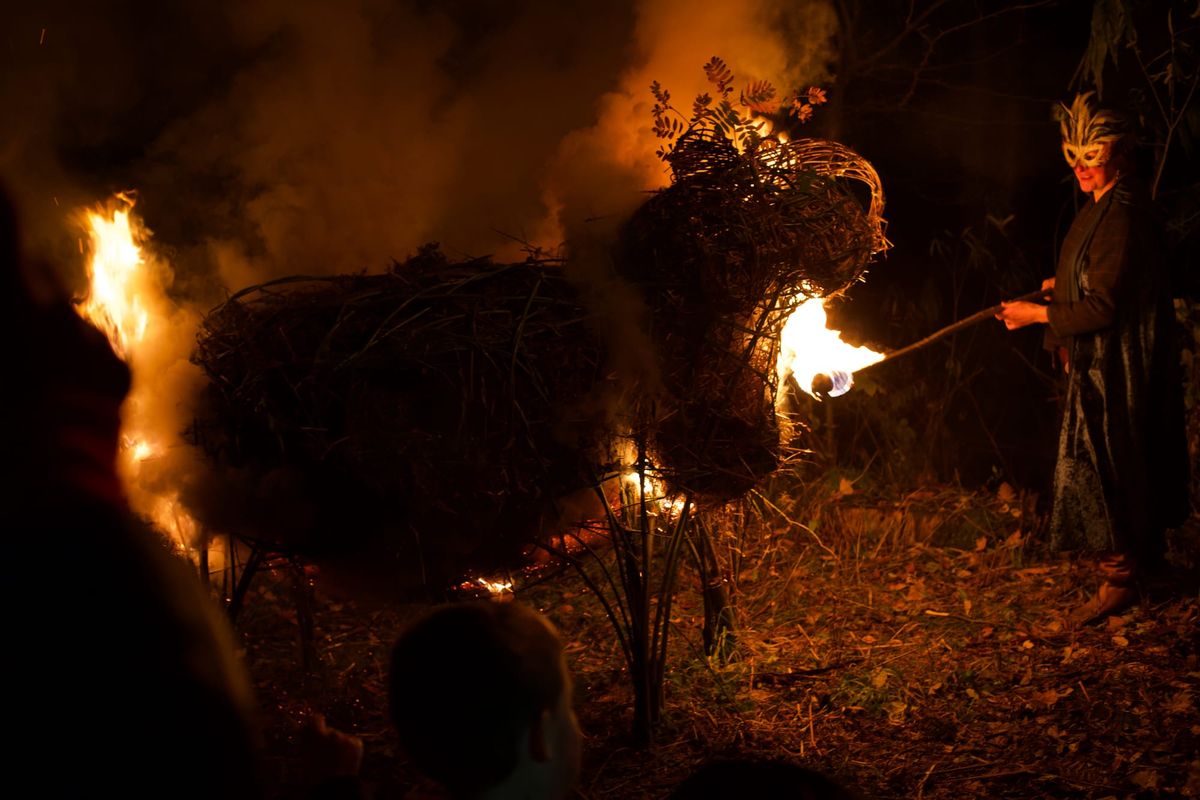
One of the oldest traditions of Samhain, pronounced sa-wayne, is the bonfire. The further back villages could push the darkness the night before Samhain, the further at bay they hoped to keep the bad things roaming around in that eerie gloom. Whether an evil faerie, a ghost, or worse, the bonfire repelled these creatures and thwarted their intentions until the sun rose again on the first of November. And if the thatch of a few homes caught fire from flying embers? Perhaps, fae expecting tribute from the village had expressed their fury.
Long before children begged their parents to buy them sexy Shrek costumes¹, the tradition of guising saw parents disguise their children hoping to deter faeries and spirits from stealing them. Well into the nineteenth century, folk in Scotland, Ireland, and Celtic regions of England believed in faerie abduction of children.² The eighteenth and nineteenth centuries weren’t great times to be a kid, and unfortunately, the accepted practices for treating Changelings, faeries left in place of abducted children and adults, made them even worse. Best to disguise your child so the faeries passed them by.
Of course, if you are a disguised child, there’s no better time to roam around the village and play tricks on your friends and relatives. You might even earn a treat by reciting a riddle or telling a joke. And there’s nothing that says you can’t still play a trick later. Don't let the faeries get you.
A third draft
As the dark half of the year closes in, some of those lovely human beings who agreed to read the second draft of my First Thing have shared their thoughts. Not all of it has been terrible! Sometime in the first half of November, I anticipate receiving the results of the developmental edit of the manuscript. I’m apprehensive that the dev edit will be just a post-it note:
Garbage. Try again.
Because I’m almost incapable of sitting still, I’ve started working on my Next Thing — I shared some of the world building I’ve done for that which I’ll be using for a TTRPG — and I’ve also started incorporating the feedback that’s started trickling in with my own feelings into an updated outline for the third draft of the First Thing. Naturally, each draft is better than the last. I like to think this one will be good enough.
¹ You’ll never get that image out of your head now.
² What that tells us is children in that era must have been substantially better behaved than they are today. Of course, faeries stopped abducting children because once the battery in the Switch runs down they also want to murder the wee tyke.