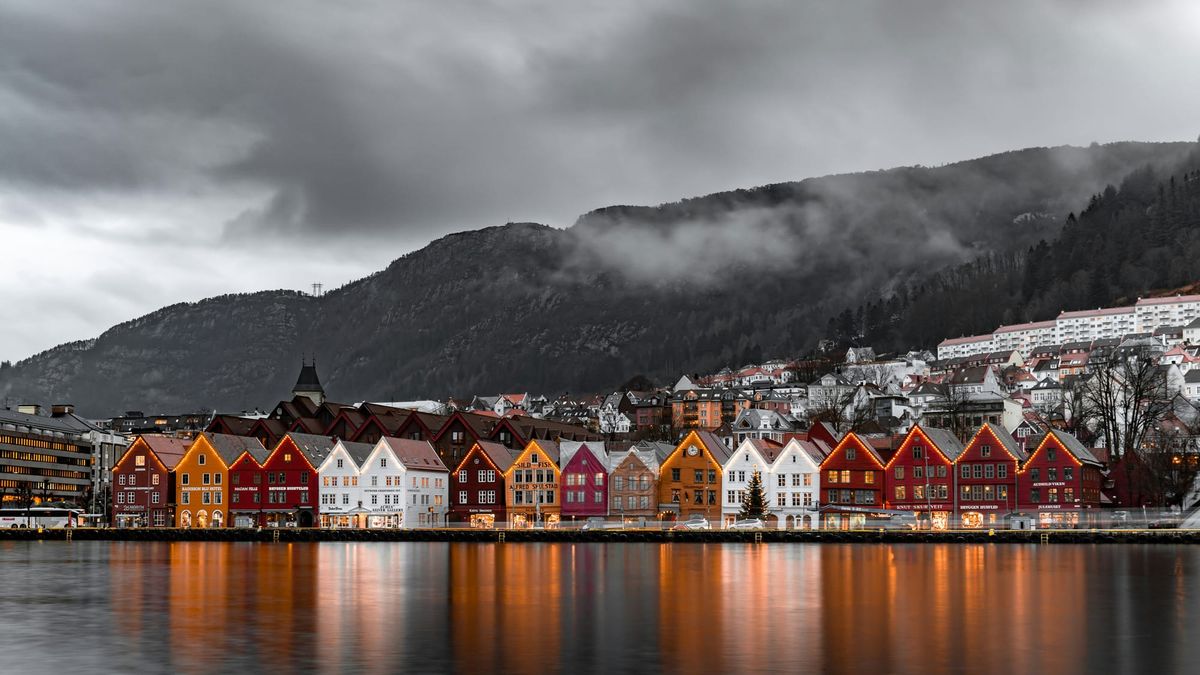
Visitor’s Guide to Ravnsfjird
When reusing world-building for TTRPGs it’s important to understand players have different expectations.
Starting in November, I’ll be running an adventure using the Nimble TTRPG system. This is the first time I’ve used that system, but it’s similar enough to Dungeons & Dragons 5.5E that I feel confident we’ll get the hang of things quickly. The system doesn’t seem to have a lot of genre flexibility, but I hope that doesn’t stop me from shifting the scope from generic high fantasy to something a little different. The following is the setting brief I’ve shared with the players.
This setting is based loosely on some world building I’ve been doing for my next novel. One of the challenges with adapting a novel’s setting is the need to provide heroic hooks. My protagonists won’t be slinging spells or fighting monsters, but gamers expect those things.
History
Before the Collapse, the fishermen of Ravnsfjird pulled just enough from the waters to feed the small population. The greenhouses grew sufficient crops that even when the ice swept down from the North in early autumn and remained until late spring, they survived, but thriving was unthinkable.
Those living in Ravnsfjird view the Collapse with mixed feelings. It changed everything, irrevocably altering the world’s climate and ushering in a new age. The ice receded and the land became fertile. Now the city bustles with immigrants from the Silent Lands of the South. Unfortunately, the changing climate and altered currents brought more than new residents plying their trades. Once legendary creatures have woken and hunt again. But that’s no reason not to have a good time.
As the impact of the Collapse became obvious — rising sea-level, receding polar ice, encroaching forests — the Migration Crisis began. Not every land handled the influx of refugees as gracefully as the fishing people of Ravnsfjird. For them, hospitality and community defined the core of their culture. When the ice blanketed their town, if they hadn’t worked together, they died individually. So Ravnsfjird built new homes and welcomed the displaced.
Twenty-five years ago, the last boat arrived. But for years, the boats had brought harrowing tales from the lands to the South, now called the Silent Lands. Formerly gleaming coastal cities once home to millions of people now the abode of fish and crabs as the waves of the risen sea lapped at crumbling buildings. Forests teeming with stealthy predators reclaimed villages and farms. Even worse were the whispers of unknowable horrors. Things lurking in the heat and humidity that defied the imagination.
Today, most of the population of Ravnsfjird descends from immigrants. No one lives who remembers even the beginning of the Migration Crisis much less the Collapse. Handwritten records remain of the decisions to welcome refugees to Ravnsfjird, but no one remains who made the decision.
Currency & wealth
There are a number of coins in use in Ravnsfjird, but they’re all expressed in relationship to either a Maiden or a Duke. The common worker earns a Duke per day and may seldom see a Maiden. There are ten Dukes to one Maiden.
Hitorical context: The coin known as a Maiden is named after the last Queen to rule over Ravnsfjird from the mainland prior to the Collapse. Similarly, the smaller coin called a Duke in honour of a minor noble and features a water bird on its face.
The people of Ravnsfjird do not accumulate wealth. If your family outgrows their home the community gives you a larger one and offers your old one to someone in need. You’re free to buy an empty home if you want to live in a specific place, but no one lacks. Instead of displaying material wealth, one demonstrates their social wealth by hosting dinner, throwing parties, socialising.
Social structure
Work is important. If you don’t have a job, the community will find you something to do. No one goes hungry and no one is homeless. This harkens back to the days when Ravnsfjird needed every soul to pull together to ensure they’d survive the days of icy cold. But the years of the Migration Crisis reinforced this credo, because immigrants earned their place in the community by helping to build the homes for the next wave of incomers.
In a TTRPG, those who are called to adventure may not be called continuously. Therefore, everyone must have a way to contribute when they’re not dispatching things with too many legs. The elementary school teacher might spend their evenings singing in taverns until someone needs their skills as a Songweaver. The trusted apothecary on the corner might master the Tools of the Sperpent in their sideline as a Cheat. Or one might discover the librarian kicking down their door to recover a long overdue book is a Beserker between adventures. Adventure finds those who keep their heart open.
Magic
No one understands what caused the Collapse, but everyone knows the root cause was magical in nature. As a result, while people appreciate magic’s benefits, they fear and distrust it. Slinging lightning around will get people talking, but not always in a good way. When the milk spoils unaccountably, or if a neighbour falls down the stairs and lands in hospital, who’s to blame?
In such an environment, magic, like thievery, lurks in the shadows of society. For a TTRPG character, finding a mentor to teach you more complicated Wind spells can be as fraught as a Cheat finding someone to teach her Misdirection. It’s not quiteas simple as walking up to a man in a pub and asking, “Hey, d’ya know how to cast fireball?” Not if you want to keep all your teeth.
Superstition & religion
Faith and superstition take up little space on a boat overburdened with family heirlooms. But the flame of devotion burns dim today. One popular goddess is Oma Vier, brought to the fjord by the original settlers when ice still covered the land. Her devotees founded the oldest medical school in the city. Admission is competitive and tuition is free, but upon graduation you serve Oma Vier as a medico for the next decade. Oma’s medicos always offer their care for free, but seldom want for much. It is common to hear Ravnsfjirders complain, “Oma, I’ve such a headache” or “Everything hurts today, Oma”.
Sister Herde, originally known as Sista Herde or the Last Shepherd to early immigrants, the mispronounced name entered cultural consciousness and now the Last Shepherd is depicted as a kind young lady ready to lead you into the next life. Few are able to report whether the popular depiction matches reality.
There are always rumours of cults springing up among the various veier and straadts, but nothing ever comes of it other than wild-haired men shouting from atop boxes. Still, children share whispered rumours and hope for a bone-chilling story to finally come true.
Weapons & armour
Only in cheesy fantasy stories do people walk around town wearing armour and carrying weapons. Ravnsfjird is a civilised city. People take the tram to work if they’re feeling hungover, lazy, or just have too many packages. And they’re more likely to carry a backpack with their lunch and a good book than a shield and sword.
Of course, some people carry weapons. There’re always some who do. But they’re seldom nice people. Not the sort of people your mother would want you associating with. The police look out for weapons and they will take a keen interest in those carrying them.
Technology
Ravnsfjird enjoys technology roughly equivalent to that found during the nineteen thirties. Electricity has grown increasingly popular after Antotu Romazan, an immigrant from Beneples, built the first windmill on the top of the cliff overlooking the town. Electric lights illuminate homes. Trams whisk silently and efficiently up the steep hills thanks to cables pulled by electric motors. Food doesn’t spoil in electric iceboxes.
For the last thirty years, Ravnsfird has enjoyed unmatched maritime trade thanks to a historic process of bonding wooden hulls. This process makes them impervious to the caustic creatures stirred up by the Collapse. But the waterfront stirs with talk of the new train tunnel nearing completion through the mountains offering fast and safe travel to Musslburo, the regional capital.
Crime
Even in a communal society like Ravnsfjird some still seek to take what others have instead of working hard. Although a remarkably safe place, completely eradicating theft and violence seems impossible. Most crime centres around avoiding taxes. Illegal gambling where neither the profits nor winnings get taxed. Elaborate confidence tricks to convince someone to part with thousands of Maidens. Money-lending when a gambler falls behind on their debts. Nighttime reclamation of debt principle.
Alone among the police forces, the Customs Police carry lethal weapons, because there is no greater crime than smuggling. Anything entering Ravnsfjird from the Silent Lands, whether goods or people, must first complete a 30 day quarantine. During this time, goods are assessed and taxed. Naturally, smugglers would like to avoid the tax and try to skip quarantine. Doctors traced the outbreak of the last plague to a crate of preserves, made from fruit now only growing in the Silent Lands, smuggled past quarantine.
Because of the cultural reluctance to accumulate material wealth, neighbours are just as likely to blame the victim of a robbery as the criminal. A modest home doesn’t offer temptation after all.
Game specifics
For this game characters are limited to the following options.
Ancestries: Human, dwarf, and gnome only.
Backgrounds: Any except Raised by Goblins and Secretly Undead.
Adventuring Motivations: All standard options or let’s craft a custom one.
Classes: All except Hunter from the Core classes plus Hexbinder from the extended classes. Some classes may be harder to play in this setting than others.
Starting Gear: To be defined during Session 0.
Explore options using the online Nimble reference.